HSAs in 2026: Maximize Tax Advantages & Investment Growth
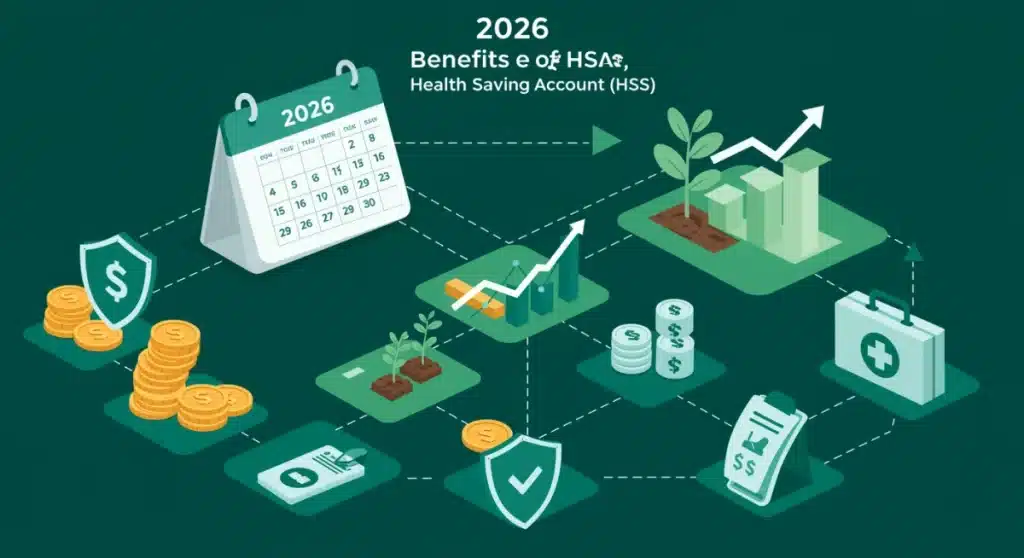
Health Savings Accounts (HSAs) in 2026 offer a triple tax advantage, allowing individuals to save, invest, and withdraw funds for qualified medical expenses tax-free, potentially saving thousands over five years.
As we look towards 2026, understanding how to effectively utilize Health Savings Accounts (HSAs) in 2026: Maximizing Tax Advantages and Investment Growth for Future Medical Expenses, Potentially Saving Thousands Over 5 Years becomes crucial for anyone seeking to optimize their personal finances and healthcare planning. This powerful financial tool offers a unique opportunity to save money on taxes, grow your wealth, and prepare for inevitable medical costs, making it an indispensable component of a robust financial strategy.
Understanding the HSA Advantage in 2026
Health Savings Accounts (HSAs) continue to stand out as one of the most powerful financial tools available for Americans in 2026. They are not merely savings accounts for healthcare; they are robust investment vehicles offering unparalleled tax benefits that can significantly impact your financial well-being over the long term.
The core appeal of an HSA lies in its triple tax advantage. Contributions are tax-deductible, earnings grow tax-free, and qualified withdrawals for medical expenses are also tax-free. This combination is rare in the financial landscape and provides a substantial incentive for eligible individuals to utilize these accounts.
Eligibility and Contribution Limits
To be eligible for an HSA, you must be enrolled in a High Deductible Health Plan (HDHP). These plans typically have lower monthly premiums but higher deductibles, making the HSA a perfect complement to cover out-of-pocket costs before the deductible is met. It’s essential to ensure your health plan qualifies as an HDHP to open and contribute to an HSA.
- HDHP Requirement: Enrollment in a qualifying High Deductible Health Plan is mandatory.
- No Other Health Coverage: You generally cannot have other health coverage, including Medicare.
- Not a Dependent: You cannot be claimed as a dependent on someone else’s tax return.
For 2026, the IRS typically adjusts contribution limits annually to account for inflation. These limits dictate how much you can contribute to your HSA each year, with additional catch-up contributions allowed for those aged 55 and older. Staying informed about these limits is crucial for maximizing your savings potential and ensuring compliance.
Understanding the eligibility criteria and annual contribution limits is the first step toward harnessing the full power of an HSA. These rules are designed to encourage responsible healthcare saving while providing significant financial incentives.
Maximizing Tax Advantages with HSAs in 2026
The tax benefits of HSAs are often described as a “triple tax advantage,” and for good reason. No other account offers such comprehensive tax efficiency for both contributions, growth, and withdrawals. This makes HSAs an incredibly attractive option for long-term financial planning, especially when considering the rising cost of healthcare.
Let’s delve deeper into each of these tax advantages to understand how they can significantly boost your savings and investment returns. By fully utilizing these benefits, you can effectively reduce your taxable income and grow your healthcare nest egg more rapidly.
Tax-Deductible Contributions
One of the immediate benefits of an HSA is that contributions made by you (or your employer on your behalf) are tax-deductible. This means that the money you put into your HSA reduces your taxable income for the year, leading to a lower tax bill. This deduction is an above-the-line deduction, meaning you don’t need to itemize to claim it, making it accessible to many taxpayers.
- Reduced Taxable Income: Directly lowers your adjusted gross income (AGI).
- No Itemization Needed: Available even if you take the standard deduction.
- Employer Contributions: Employer contributions are also tax-free to the employee.
This upfront tax break provides an immediate incentive to contribute as much as possible to your HSA, essentially giving you a guaranteed return on your contributions in the form of tax savings. The more you contribute, the greater your immediate tax benefit.
Tax-Free Growth and Withdrawals
Beyond the initial tax deduction, the funds within your HSA grow tax-free. This is where the investment power of an HSA truly shines. Any interest, dividends, or capital gains earned on your HSA investments are not subject to taxes as long as they remain in the account. This allows your money to compound more aggressively over time.
Furthermore, and perhaps most importantly, qualified withdrawals for medical expenses are entirely tax-free. This means you never pay taxes on the money you use for eligible healthcare costs, from doctor’s visits and prescriptions to dental and vision care. This tax-free withdrawal feature makes the HSA an incredibly efficient way to pay for healthcare both now and in retirement.
The combination of tax-deductible contributions, tax-free growth, and tax-free withdrawals creates a powerful financial tool that can significantly reduce your lifetime healthcare costs and enhance your overall financial security. Understanding and leveraging these advantages is key to maximizing the value of your HSA.
Strategies for Investment Growth within Your HSA
While the immediate tax advantages of an HSA are compelling, its potential for long-term investment growth is what truly sets it apart. Treating your HSA as an investment vehicle, rather than just a savings account, can lead to substantial wealth accumulation over time. Many HSA providers offer investment options similar to those found in 401(k)s or IRAs, including mutual funds, ETFs, and even individual stocks.
The key is to proactively choose to invest your HSA funds, rather than letting them sit in a low-interest savings account. The earlier you start investing, the more time your money has to grow, thanks to the power of compounding.
Choosing the Right Investment Options
When selecting investment options for your HSA, consider your risk tolerance, time horizon, and financial goals. For younger individuals with a long time until retirement, a more aggressive portfolio focused on growth stocks or equity mutual funds might be appropriate. For those closer to retirement, a more conservative approach with a mix of bonds and less volatile funds might be preferred.
- Assess Risk Tolerance: Understand how much risk you are comfortable taking.
- Consider Time Horizon: Longer horizons allow for more aggressive investments.
- Diversify Your Portfolio: Spread your investments across different asset classes.
Many HSA custodians offer a range of investment choices. Take the time to research these options and select those that align with your personal financial strategy. Don’t hesitate to consult with a financial advisor if you need guidance in making these decisions.
Long-Term Growth Potential
The tax-free growth within an HSA, combined with smart investment choices, can lead to significant wealth accumulation. For instance, if you consistently contribute the maximum amount and invest those funds, even modest annual returns can result in a substantial sum over 10, 20, or even 30 years. This growth can then be used to cover future medical expenses in retirement, or even earlier.
Consider the potential of letting your HSA balance grow untouched for decades, paying for current medical expenses out of pocket and saving receipts. This strategy allows your invested HSA funds to compound tax-free for an extended period, creating a substantial reservoir of funds for future healthcare needs, effectively turning your HSA into an additional retirement account specifically for medical costs.
Strategic Use of HSAs for Future Medical Expenses
While HSAs are excellent for covering immediate healthcare costs, their true power lies in their ability to fund future medical expenses, especially in retirement. Healthcare costs are a significant concern for retirees, and an adequately funded HSA can alleviate much of that financial burden.
By treating your HSA as a long-term investment vehicle, you can build a substantial fund dedicated to healthcare, ensuring peace of mind during your golden years. This strategic approach requires discipline and foresight but offers immense rewards.
Paying for Current Expenses Out-of-Pocket
One powerful strategy to maximize HSA growth is to pay for current medical expenses out-of-pocket, if financially feasible, and save all your receipts. This allows your HSA funds to remain invested and continue growing tax-free. You can then reimburse yourself for these past qualified medical expenses at any point in the future, even decades later, without paying taxes on the withdrawals.
- Preserve Invested Funds: Let your HSA investments continue to compound.
- Maintain Detailed Records: Keep all receipts for qualified medical expenses.
- Future Tax-Free Reimbursements: Withdraw funds tax-free for past expenses when needed.
This strategy effectively turns your HSA into a flexible, tax-free emergency fund for healthcare, accessible at your discretion. The longer you wait to reimburse yourself, the more your money has grown, making the tax-free withdrawal even more valuable.
Healthcare in Retirement
Healthcare costs in retirement can be astronomical, often exceeding what many people anticipate. An HSA can be a vital tool in mitigating these expenses. Once you reach age 65, you can withdraw funds from your HSA for any purpose without penalty, though non-qualified withdrawals will be subject to income tax. However, withdrawals for qualified medical expenses remain tax-free.
This flexibility means your HSA can act as a supplemental retirement account, especially for healthcare. It can cover Medicare premiums, deductibles, co-pays, and other out-of-pocket costs not covered by insurance. For individuals who have consistently contributed and invested their HSA funds, this can translate into significant savings and financial security in retirement.
Comparing HSAs with Other Retirement and Savings Accounts
Understanding how HSAs stack up against other popular retirement and savings vehicles like 401(k)s and IRAs is crucial for a holistic financial plan. While each account serves a distinct purpose, the unique benefits of HSAs often make them a priority for eligible individuals, especially when considering healthcare costs.
HSAs offer a unique combination of tax advantages that neither 401(k)s nor IRAs can fully match, particularly concerning tax-free withdrawals for qualified medical expenses. This makes them a powerful complement to traditional retirement savings.
HSA vs. 401(k) and IRA
The primary difference lies in the tax treatment of withdrawals. While 401(k)s and traditional IRAs offer tax-deductible contributions and tax-deferred growth, withdrawals in retirement are typically taxed as ordinary income. Roth IRAs, on the other hand, feature after-tax contributions but tax-free growth and withdrawals in retirement.
HSAs combine the best of both worlds: tax-deductible contributions (like a traditional 401(k)/IRA) and tax-free growth and withdrawals for qualified medical expenses (even better than a Roth, as contributions are also tax-deductible). This makes the HSA the most tax-advantaged account available for healthcare expenses.
- 401(k)/Traditional IRA: Tax-deductible contributions, tax-deferred growth, taxable withdrawals in retirement.
- Roth IRA: After-tax contributions, tax-free growth, tax-free withdrawals in retirement.
- HSA: Tax-deductible contributions, tax-free growth, tax-free withdrawals for qualified medical expenses.
For individuals eligible for an HSA, it often makes sense to prioritize contributing enough to receive any employer match in their 401(k), then maximize HSA contributions, and then contribute to other retirement accounts. This strategy optimizes for the unique tax advantages of each account.
The ability to withdraw funds tax-free for medical expenses, both now and in retirement, gives HSAs a distinct edge. This is particularly valuable given the unpredictable and often high costs of healthcare throughout one’s life.
The Potential for Savings: Thousands Over 5 Years
The cumulative impact of an HSA’s tax advantages and investment growth can translate into significant savings over just a few years. When considering a five-year horizon, the triple tax benefit can realistically save individuals thousands of dollars, making a substantial difference in their personal finances.
Let’s illustrate how these savings can add up, making the HSA a must-have for those looking to optimize their financial health and prepare for medical costs.
Illustrative Savings Scenario
Imagine an individual contributing the maximum family contribution to an HSA for five years, assuming a modest investment return and a 25% marginal tax bracket. Each year, the tax deduction alone can save hundreds of dollars. Over five years, these deductions compound, reducing overall tax liability significantly.
Furthermore, the tax-free growth on investments means that the earnings aren’t eroded by annual taxes, allowing the principal to grow faster. If this individual also incurs qualified medical expenses, paying for them with tax-free HSA withdrawals avoids paying taxes on that money entirely, which would otherwise be necessary if using post-tax income.
- Annual Tax Deductions: Reduces taxable income each year.
- Compounding Growth: Tax-free investment returns accelerate wealth accumulation.
- Tax-Free Withdrawals: Eliminates taxes on money used for qualified medical expenses.
For example, if an individual saves $1,000 in taxes annually through deductions, and their investments grow by an average of 5% per year tax-free, and they use $500 annually for tax-free medical withdrawals, the cumulative savings over five years can easily reach several thousands of dollars when accounting for all three benefits.
This demonstrates the tangible financial benefit of proactively managing and investing your HSA. It’s not just about saving for healthcare; it’s about smart financial management that directly impacts your bottom line.
Navigating Future Changes and Staying Informed
While HSAs offer consistent and powerful benefits, the financial and healthcare landscapes are always evolving. Staying informed about potential regulatory changes, adjustments to contribution limits, and new HSA provider offerings is crucial to continually maximize your account’s potential.
Proactive engagement with your HSA and staying updated on relevant information ensures you can adapt your strategy as needed and continue to leverage this valuable financial tool effectively.
Monitoring IRS Guidelines and Contribution Limits
The IRS typically announces new HSA contribution limits and HDHP definitions towards the end of each year for the upcoming calendar year. It’s essential to monitor these announcements to ensure your contributions remain compliant and optimized. Over-contributing can lead to penalties, while under-contributing means missing out on potential tax advantages.
Subscribing to financial news outlets, checking the IRS website, or consulting with a tax professional can help you stay current with these important details. Being prepared for these changes allows you to adjust your savings strategy accordingly.
Reviewing HSA Provider Options
The market for HSA providers is competitive, with various institutions offering different investment options, fee structures, and user experiences. Periodically reviewing your current HSA provider and exploring alternatives can ensure you’re getting the best value and investment opportunities.
- Compare Fees: Look for providers with low administrative and investment fees.
- Evaluate Investment Options: Ensure the provider offers a diverse range of suitable investments.
- Assess User Experience: A user-friendly platform can simplify management.
Some providers may offer more robust investment platforms, while others might focus on lower fees for basic savings. Your ideal provider will depend on whether you prioritize investment growth or simply a low-cost savings vehicle for medical expenses. Regularly assessing these factors can help you make informed decisions about where to house your HSA funds.
By staying vigilant and informed, you can ensure your HSA continues to be a highly effective tool for managing healthcare costs and growing your wealth well into the future.
| Key Aspect | Description |
|---|---|
| Triple Tax Advantage | Contributions are tax-deductible, growth is tax-free, and qualified withdrawals are tax-free. |
| Investment Vehicle | HSAs can be invested in various funds, allowing for significant tax-free growth over time. |
| Future Medical Expenses | Ideal for covering high deductibles, co-pays, and retirement healthcare costs tax-free. |
| Long-Term Savings | Paying current medical costs out-of-pocket and saving receipts allows HSA funds to grow for decades. |
Frequently Asked Questions About HSAs in 2026
To be eligible for an HSA in 2026, you must be enrolled in a High Deductible Health Plan (HDHP), have no other health coverage (like Medicare), and not be claimed as a dependent on someone else’s tax return. These criteria are set by the IRS.
HSAs offer a triple tax advantage because contributions are tax-deductible, the money grows tax-free through investments, and withdrawals for qualified medical expenses are also entirely tax-free. This combination is unique among financial accounts.
Yes, many HSA providers allow you to invest your funds in various options like mutual funds, ETFs, and stocks, similar to a 401(k) or IRA. Investing your HSA can significantly boost its growth potential over the long term.
By investing your HSA funds and letting them grow tax-free, you build a substantial reserve for retirement healthcare costs. You can then withdraw these funds tax-free for qualified medical expenses, including Medicare premiums, in your golden years.
This strategy involves paying current medical bills with your regular income and meticulously saving all receipts. Your HSA funds remain invested, growing tax-free. You can then reimburse yourself for these past expenses tax-free at any point in the future, maximizing growth.
Conclusion
In conclusion, Health Savings Accounts (HSAs) in 2026: Maximizing Tax Advantages and Investment Growth for Future Medical Expenses, Potentially Saving Thousands Over 5 Years represent an indispensable tool for proactive financial planning and healthcare management. Their unparalleled triple tax advantage – tax-deductible contributions, tax-free growth, and tax-free withdrawals for qualified medical expenses – positions them as a cornerstone of smart personal finance. By understanding eligibility, optimizing contributions, strategically investing funds, and leveraging the long-term growth potential, individuals can significantly reduce their tax burden, build substantial wealth, and secure their financial future against rising healthcare costs. The disciplined use of an HSA is not merely about saving for medical bills; it’s about building a robust financial asset that can provide peace of mind and substantial savings for decades to come, making it a critical component of any comprehensive financial strategy.